
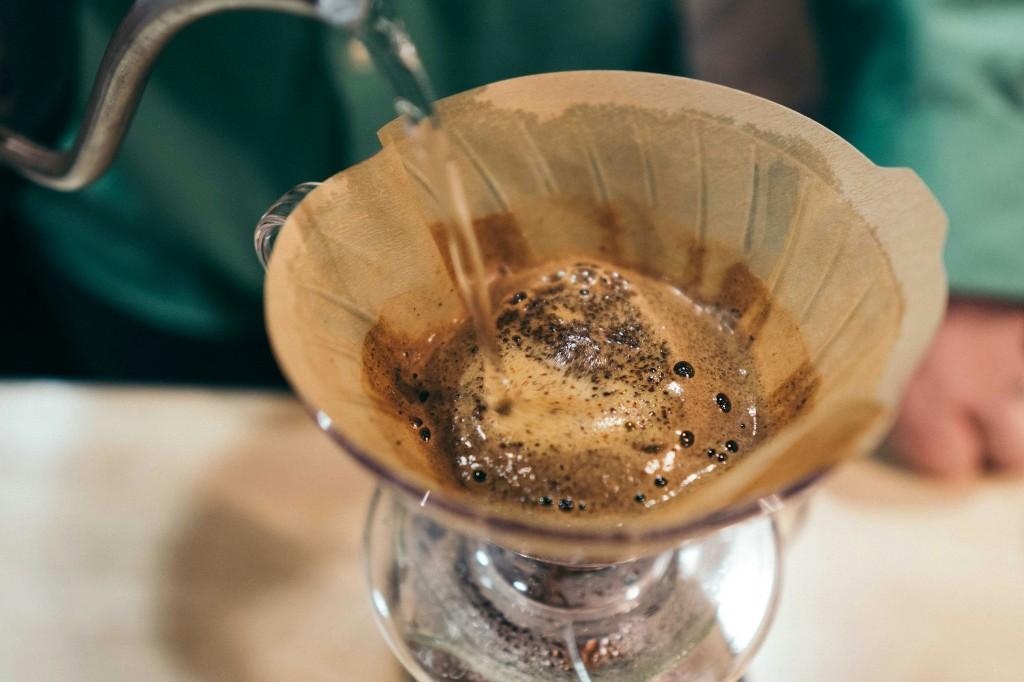
If you’ve ever brewed a coffee here that tasted flat, dull, or vaguely chalky — and the same bag sang when you brewed it on a trip — the beans probably weren’t the problem. Your cup is about 98% water, and water in the Salt Lake Valley has opinions.
Why Salt Lake water is hard
Our water starts as Wasatch snowmelt, which sounds idyllic until you remember what those mountains are made of. On its way down, the water picks up dissolved calcium and magnesium from limestone and other minerals. By the time it reaches a tap in Midvale, Murray, or downtown, it typically lands in the “hard” to “very hard” range — the exact number shifts by district, source mix, and season, which is why the same recipe can drift between summer and winter.
That white crust on your kettle? That’s the mountain, accumulating in your kitchen.
What hard water does to your coffee
Two things matter for taste, and Salt Lake water tends to have a lot of both:
- Hardness (calcium and magnesium) drives how aggressively water pulls flavor out of the grounds. Some is good — distilled water makes hollow coffee. Too much pushes extraction toward heavy and muddy.
- Alkalinity (bicarbonate) is the bigger villain here. Bicarbonate is a buffer: it neutralizes acidity in the cup. The bright, juicy, fruit-forward notes that make a light roast worth drinking are acids — and high-alkalinity water erases them before they reach your tongue.
This is why a washed Ethiopian that tasted like peach iced tea at the roastery can taste like “just coffee” at home. The roast didn’t change. The water did.
The fixes, cheapest first
- $0 — Taste your tap honestly. Pour a glass, let it reach room temperature, and sip. If it tastes minerally, chlorinated, or like a swimming pool smells, every cup you brew starts with that handicap.
- ~$25 — Charcoal filter pitcher. A basic carbon-filter pitcher strips chlorine and off-flavors. It does not remove much hardness or alkalinity, but it’s a real upgrade if your tap fails the taste test, and it protects your kettle a little.
- ~$2/week — Cut your tap with distilled. The sleeper move for the valley: blend roughly half tap, half distilled water (grocery store gallon jugs). You keep enough minerals for proper extraction while diluting the hardness and bicarbonate that flatten light roasts. Adjust the blend by taste — more distilled if your cups still taste dull, less if they start tasting thin or sour.
- Full nerd — Build your water. Start from distilled and add minerals back, either with packets like Third Wave Water or a DIY epsom-salt-and-baking-soda concentrate. This is how competition baristas get identical water anywhere on earth. Overkill for most people; glorious if you’re the type who weighs beans to the tenth of a gram.
Your gear is suffering too
Hard water means scale, and scale kills espresso machines and narrows kettle spouts. If you brew with unfiltered Salt Lake tap, descale more often than the manual suggests — the manual wasn’t written for our water. Anything that heats water here should get cleaned on a schedule, not “when it looks bad.”
One more local quirk: altitude
At ~4,300 feet, water in the valley boils around 203°F instead of 212°F — which happens to land near the sweet spot for light roasts. Brew with water straight off the boil here; you don’t need the 30–60 second rest that sea-level recipes call for. One of the few ways Salt Lake water is on your side.
What to read next
The general chemistry — extraction, ratios, and temperature — lives in Water & extraction, and your grinder is the other half of the equation in Grinding.
And if you’re going to fix your water, give it something worth extracting — we roast to order in Midvale and ship fresh anywhere in the valley and beyond.